
Description
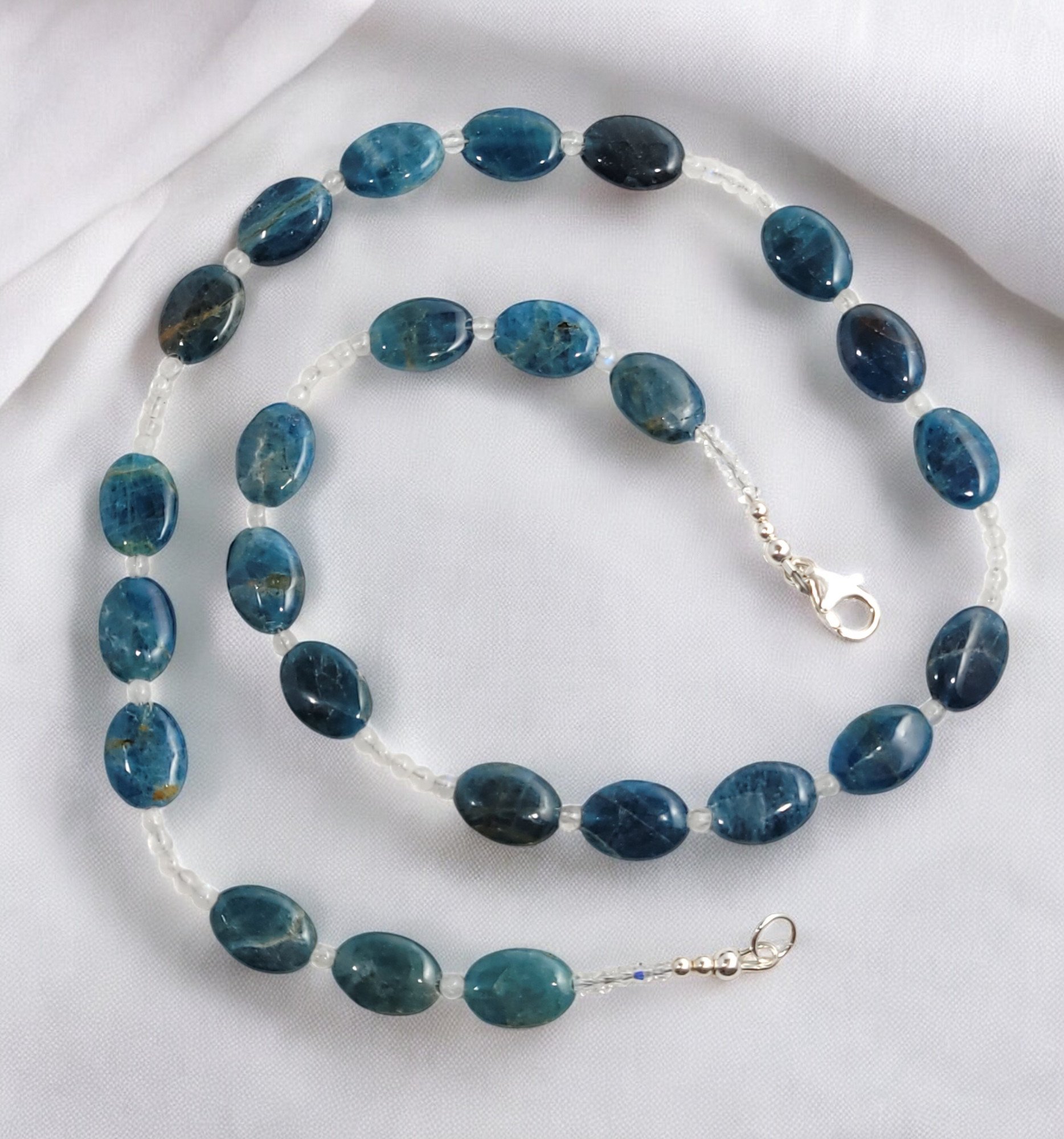
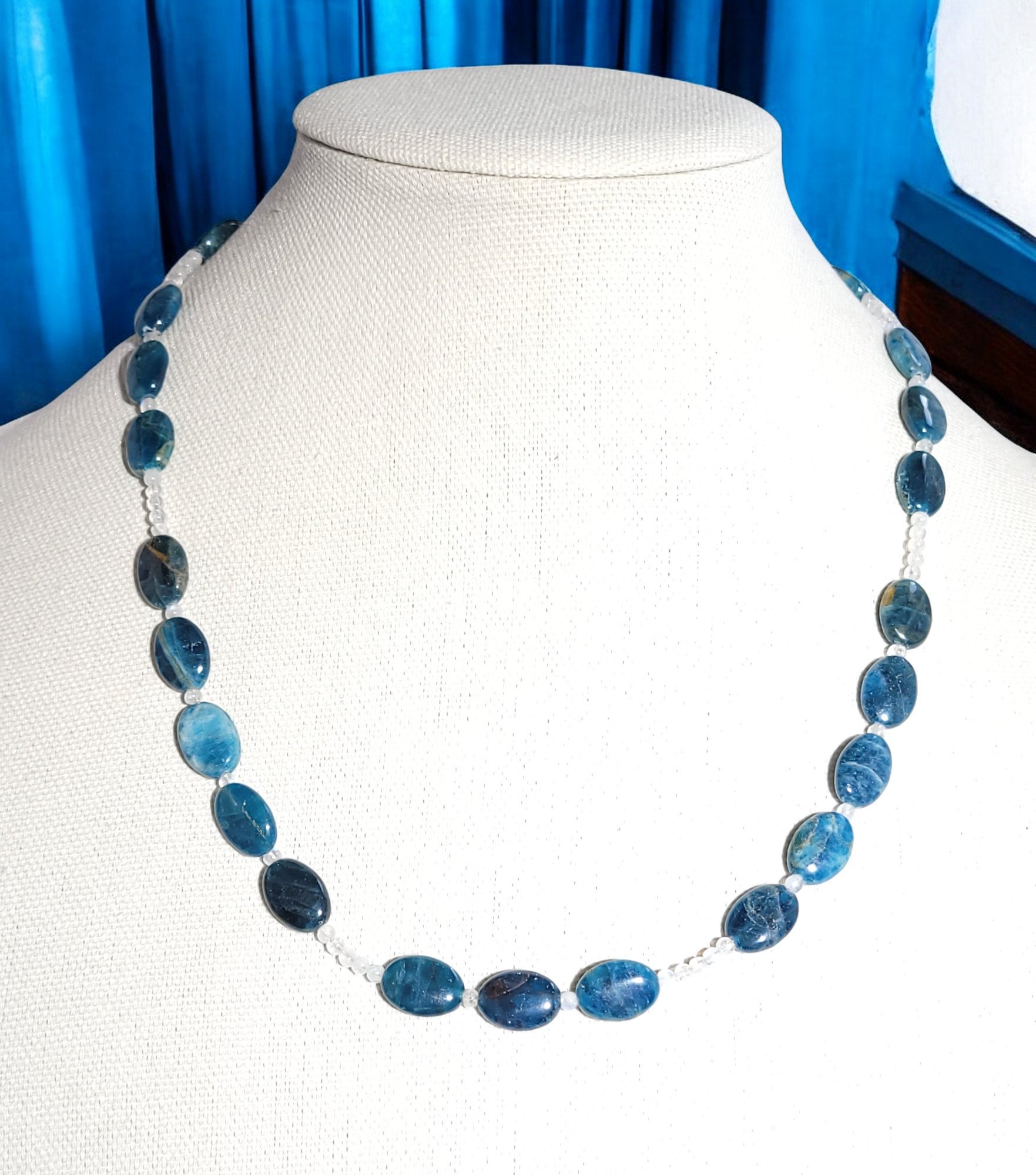
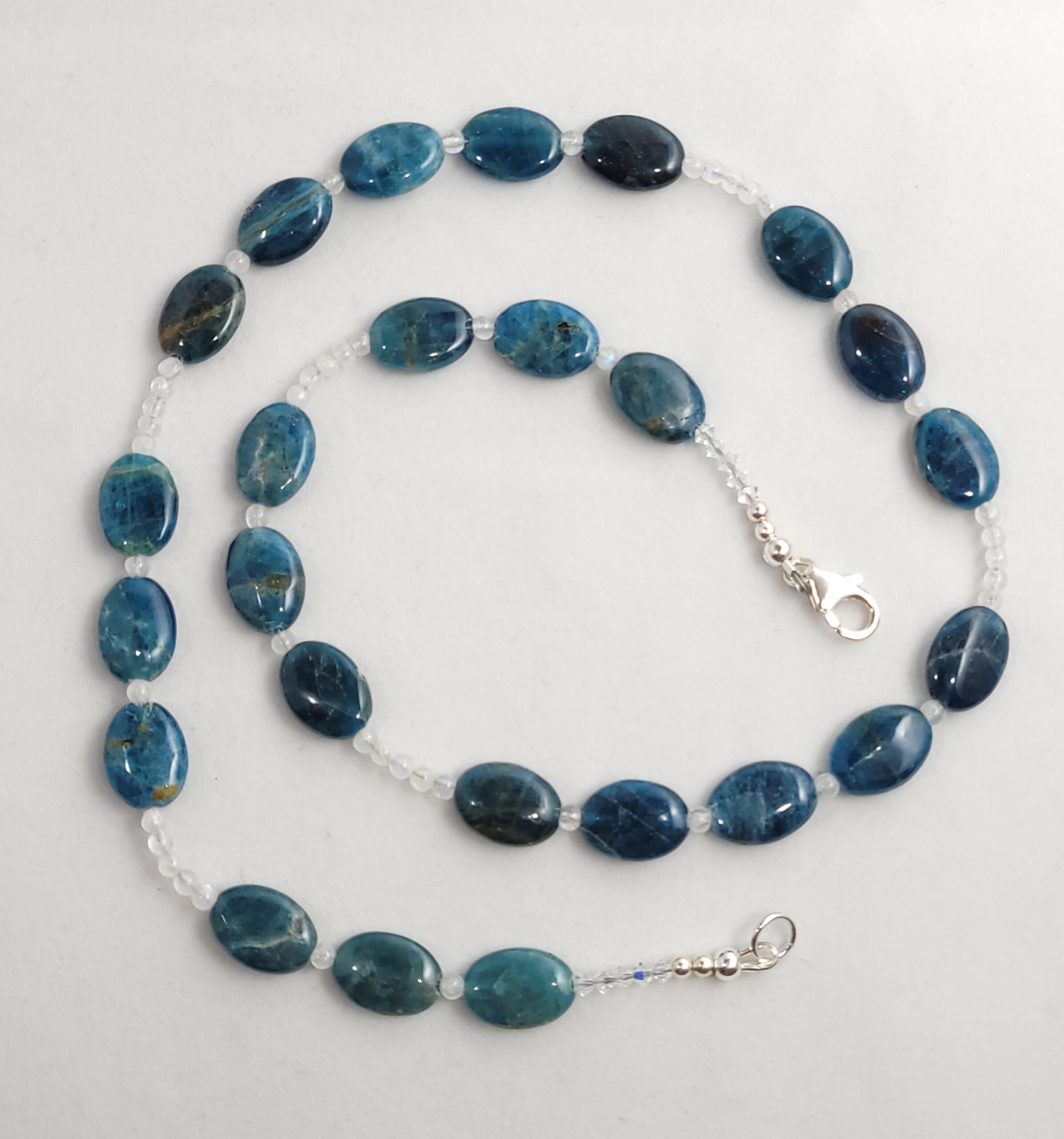
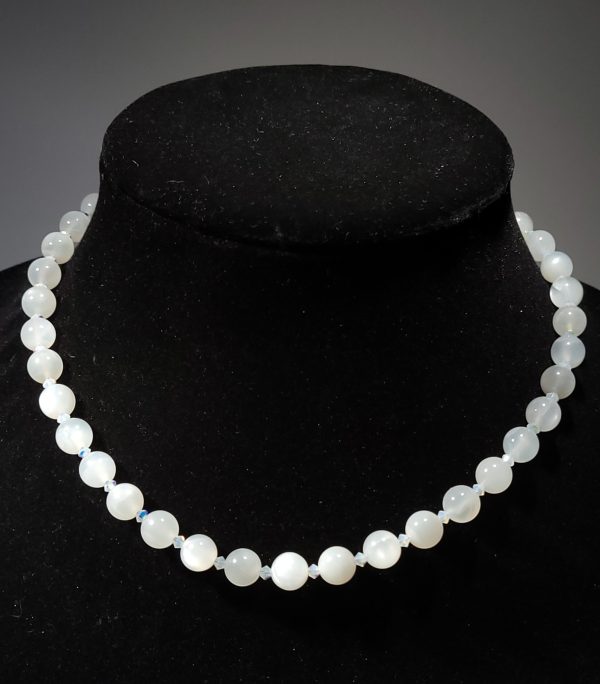
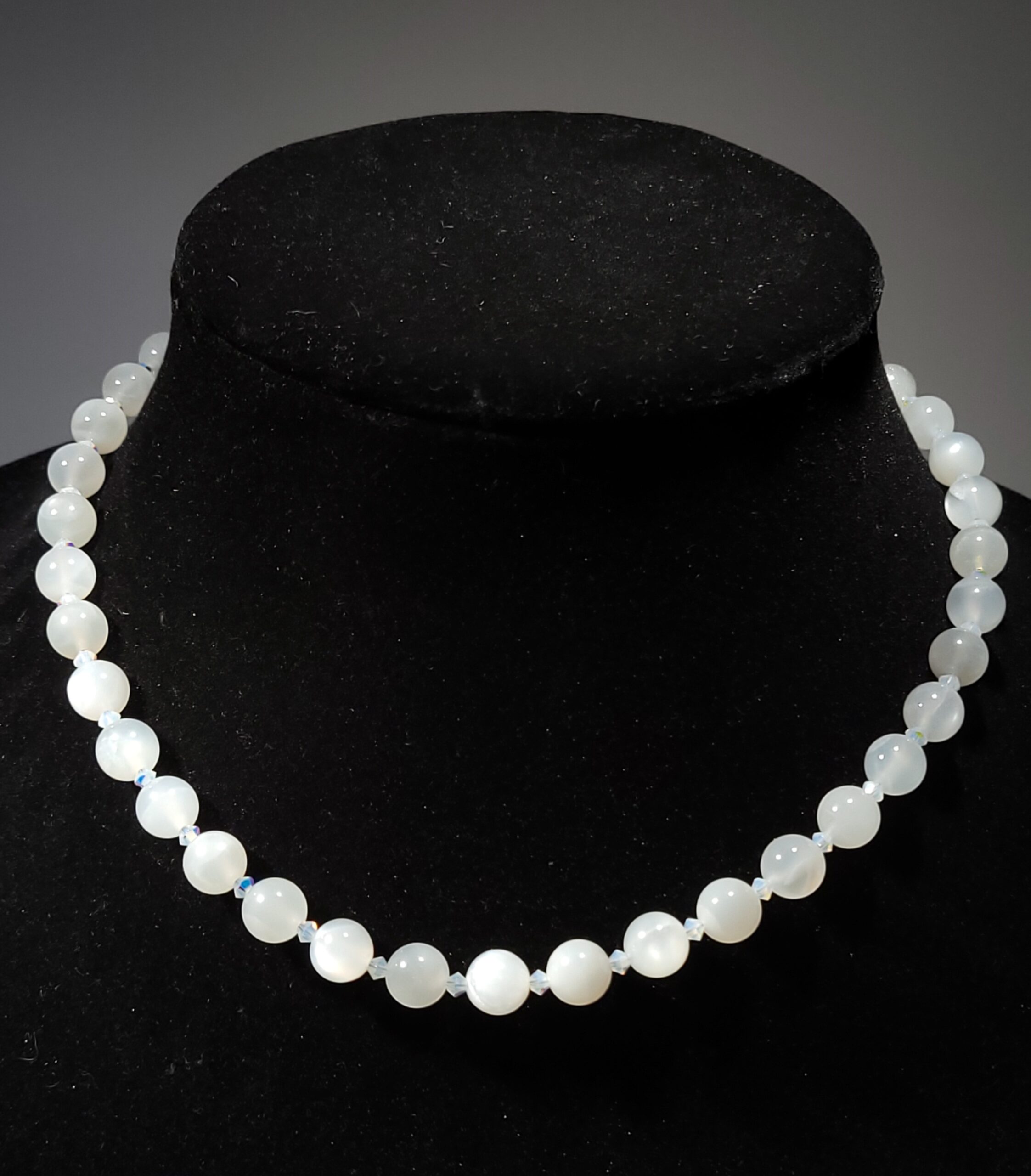
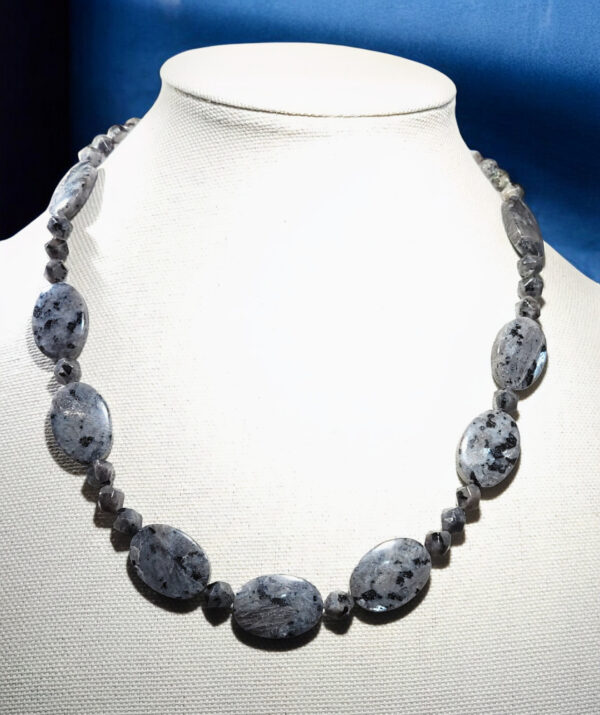
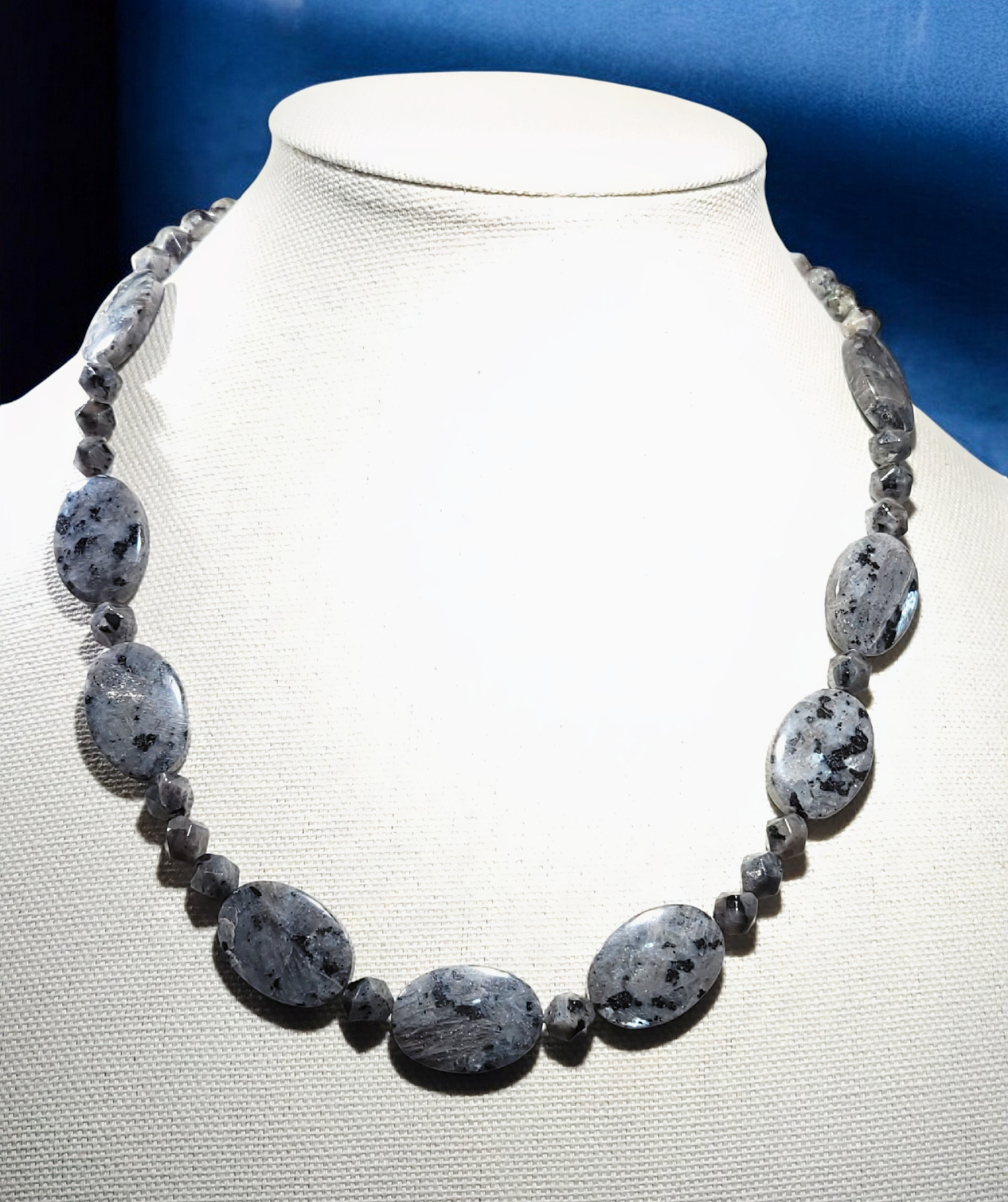
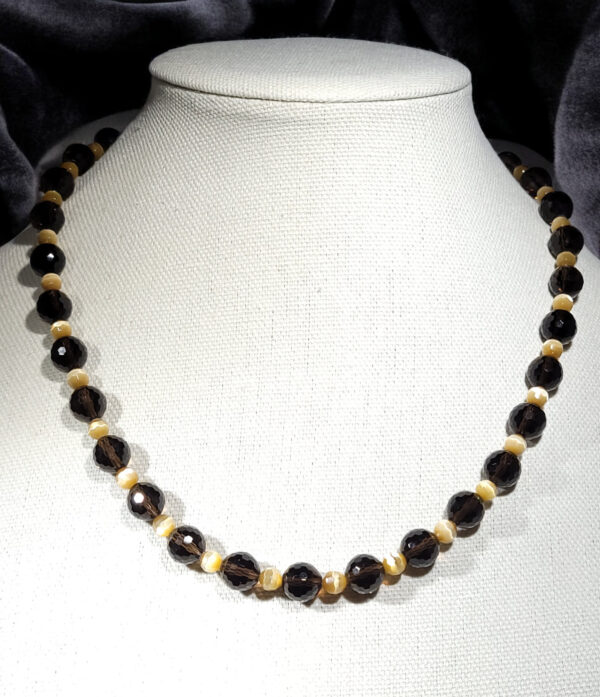
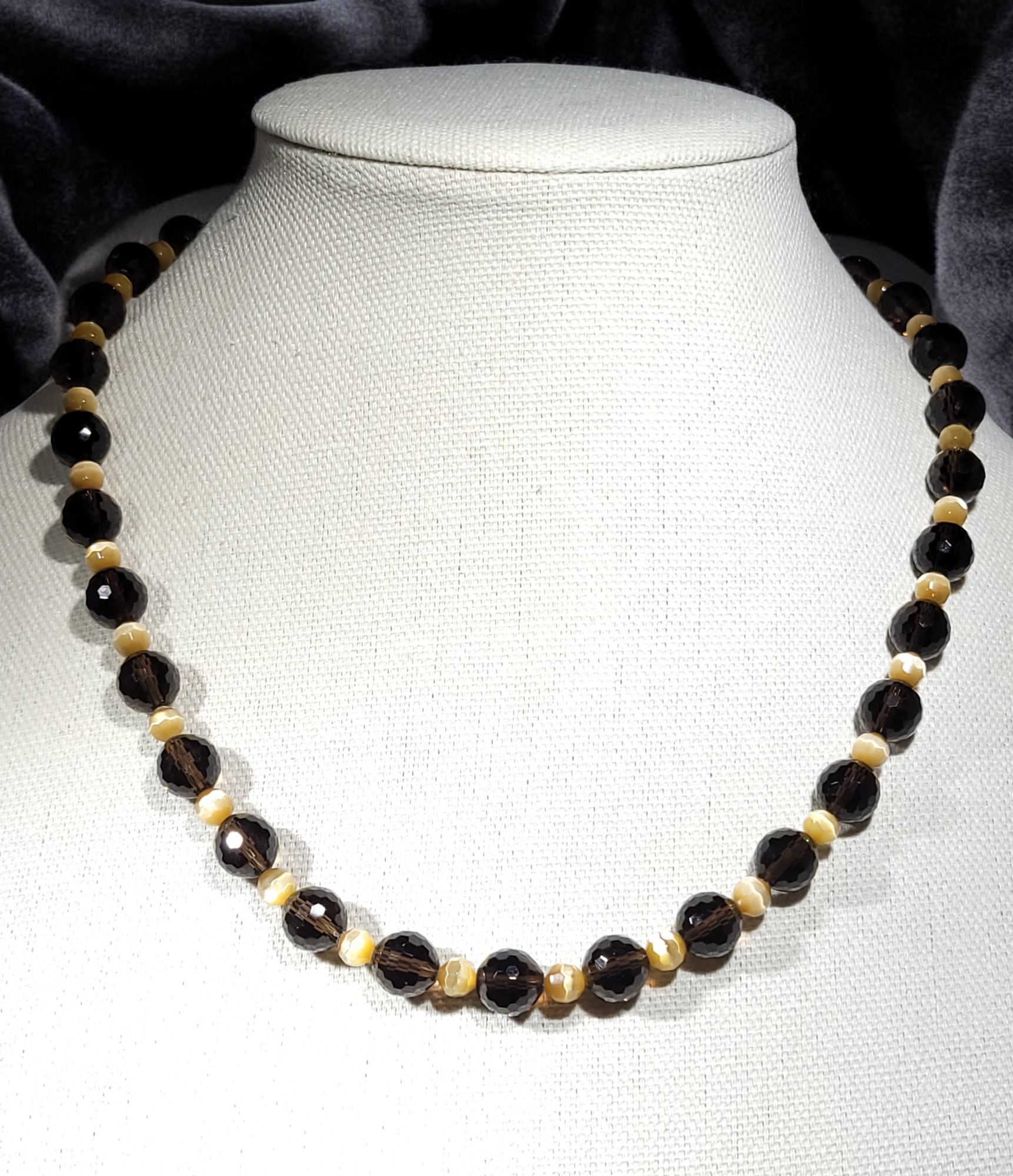
Apatite, moonstone, Swarovski crystal, and sterling silver beads, with a sterling silver trigger clasp and findings. Measures 21 3/4″
Apatite.
Apatite is found in many places around the world. In 1786, the German geologist Abraham Gottlob Werner coined the name ‘Apatite.’ The name is derived from a Greek word that means ‘to deceive.’ The name justifies the nature of the stone since many other minerals are often mistaken to be apatite.
5 on the Mohs hardness scale
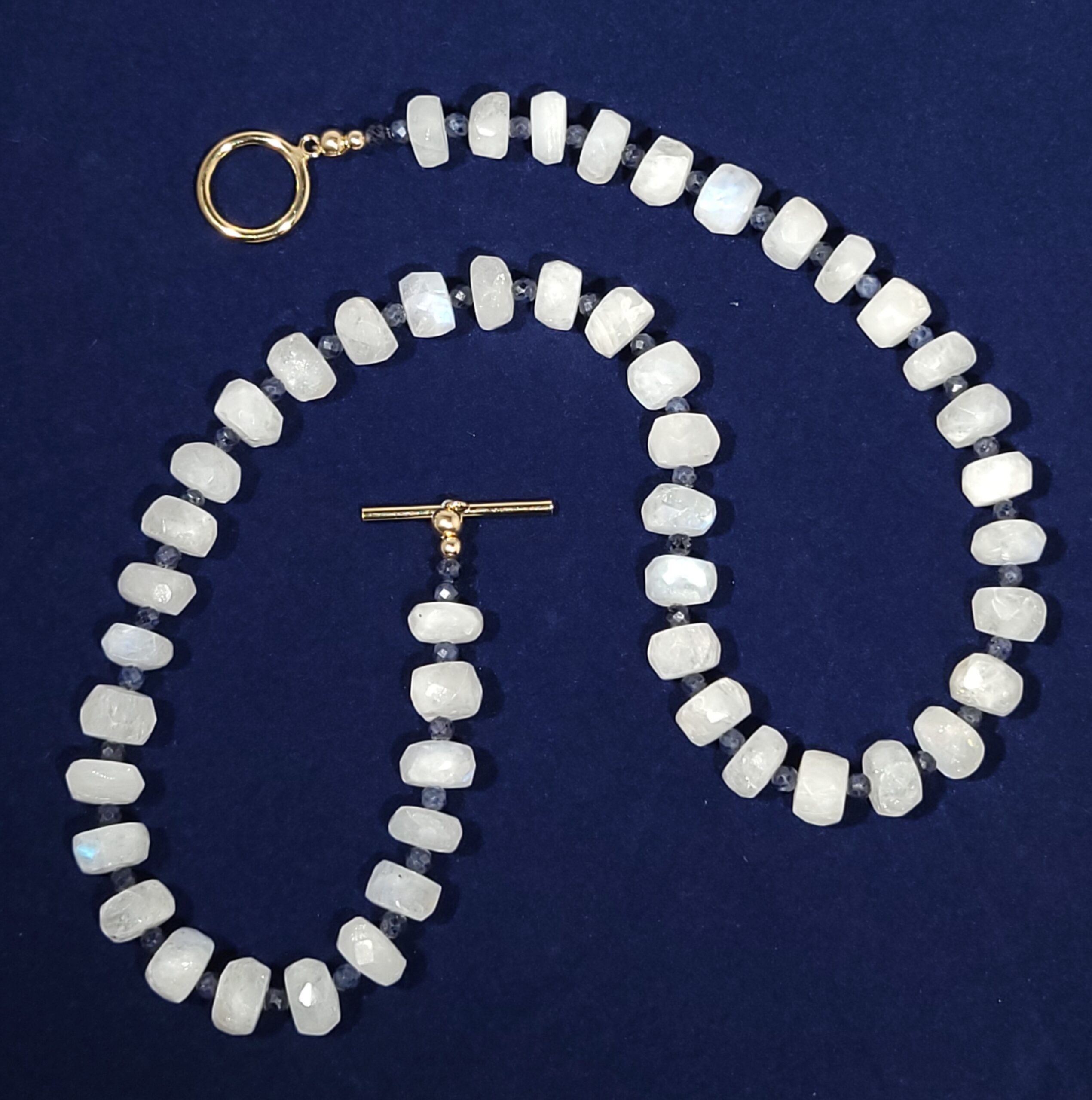
Moonstone.
Ancient cultures coveted moonstone, and it is found all over the world. It is prized for its blue to white adularescence — a billowy, moonlight-like sheen. Adularescence is the optical phenomenon that causes the extraordinary glow on the surface of moonstone. This happens when light reflects off of the thin layers of different feldspar minerals within moonstone. The layers act as a diffuser, softening the light and allowing it to bounce around the stone.
6 – 6.5 on the Mohs hardness scale

Reviews
There are no reviews yet.