

Description
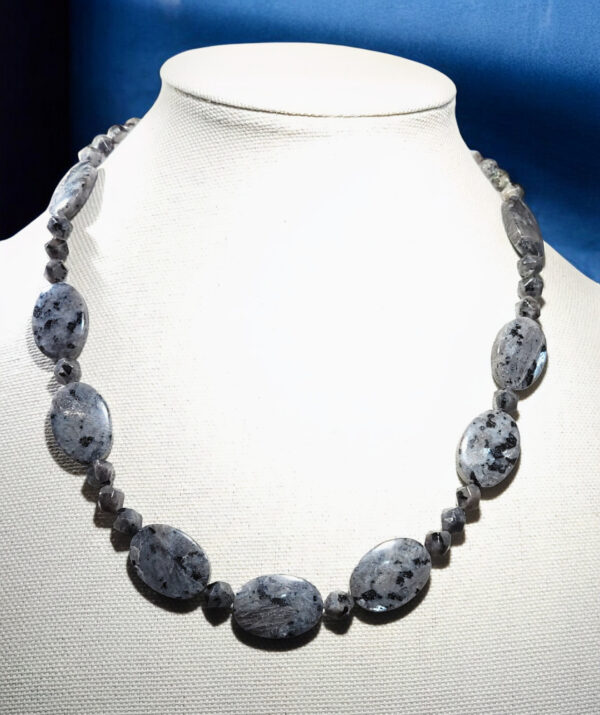
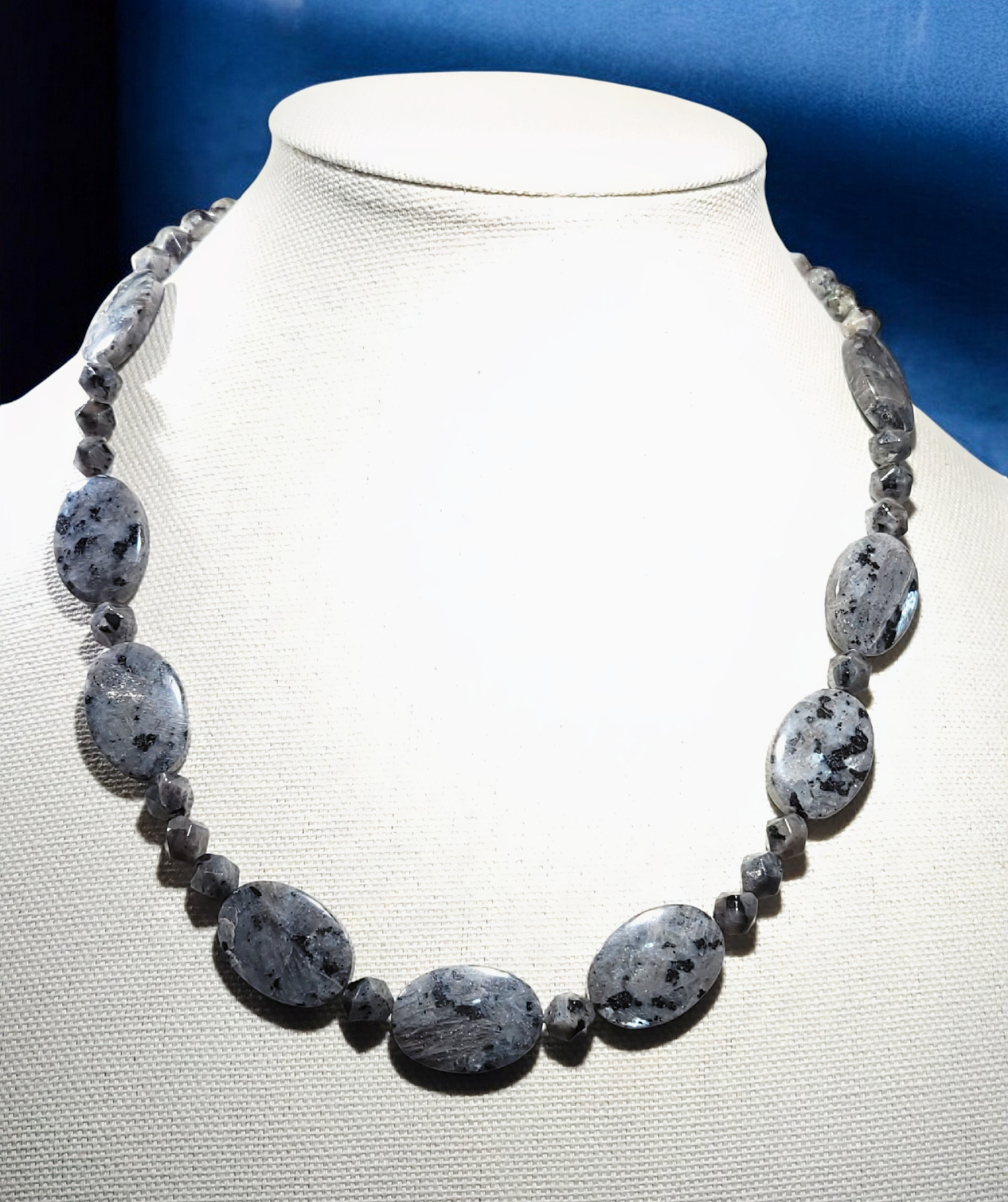
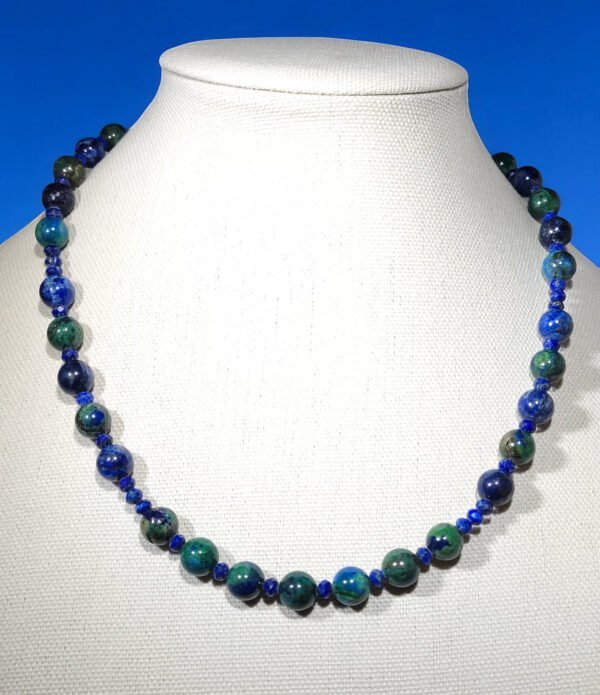
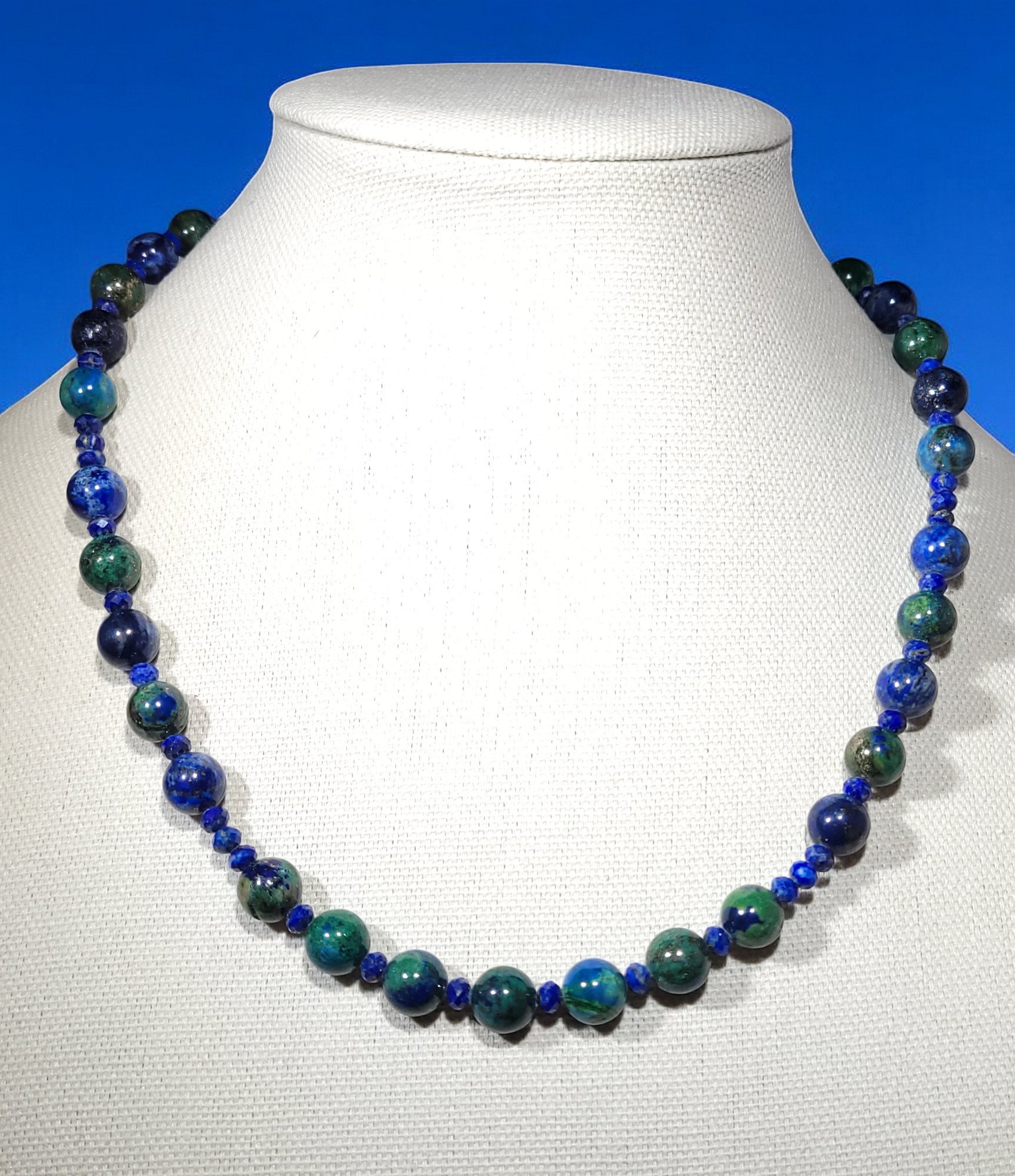
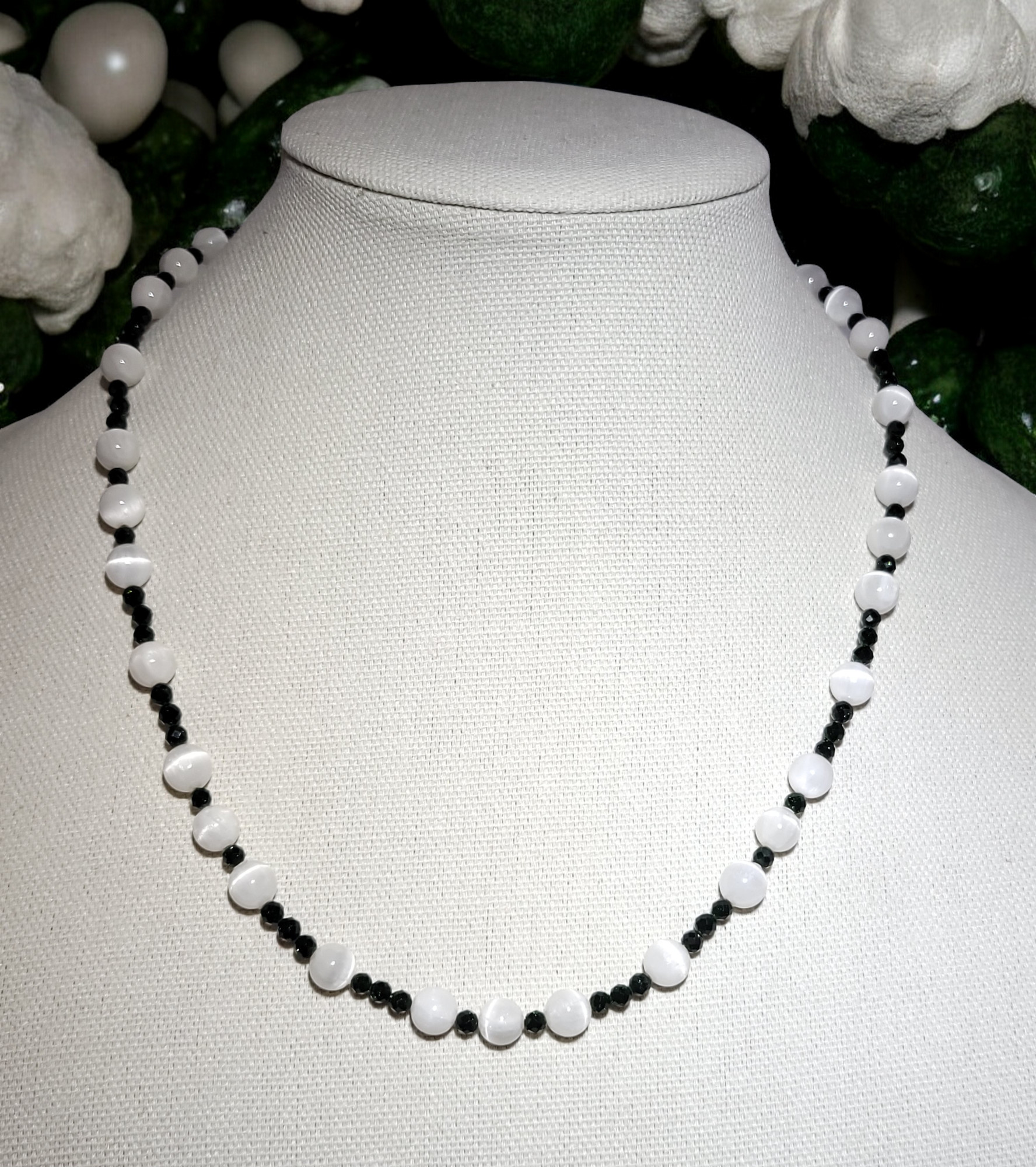
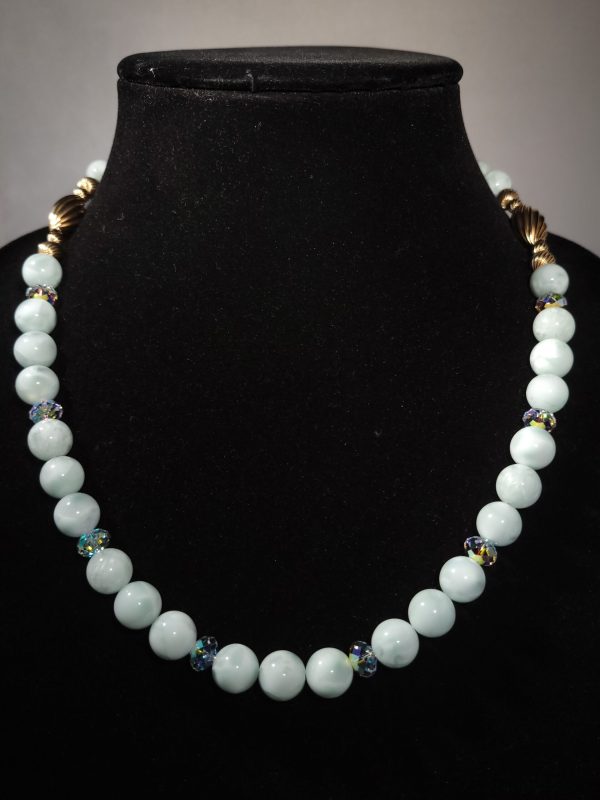
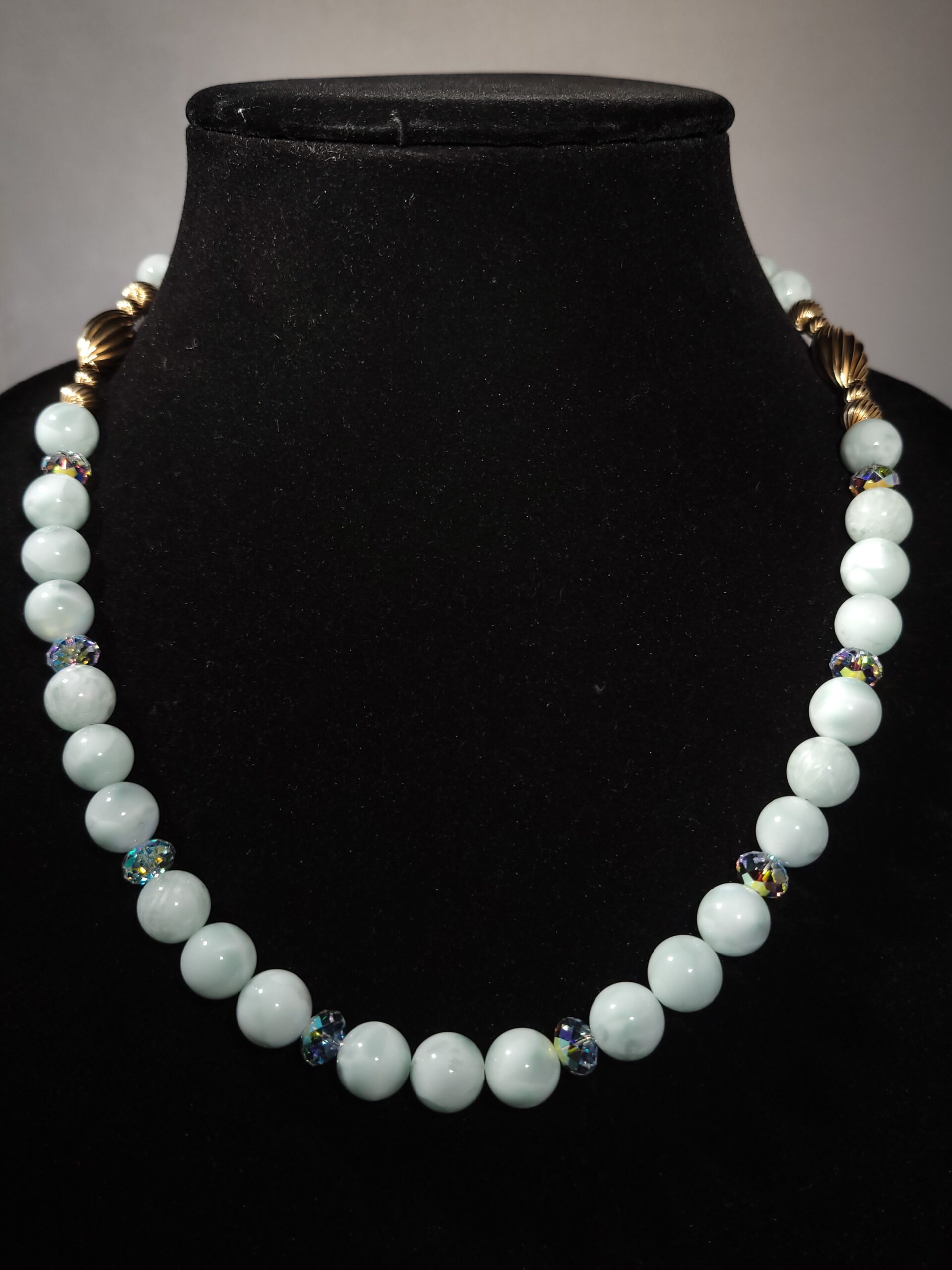
Labradorite and Lapis Lazuli with gold-filled beads, and a gold-filled trigger clasp and findings. Measures 19 1/4″
Labradorite.
Labradorite is an unusual mineral. It can display a beautiful iridescent play of colors, caused by internal fractures in the mineral that reflect light back and forth, dispersing it into different colors. This effect, known as labradorescence, gives labradorite its appeal and fame. Labradorite is a feldspar mineral, one of the most abundant group of minerals in Earth’s crust. Although many of these rock forming minerals exhibit iridescence, labradorite and moonstone are best known for this optical phenomenon. The iridescence is caused by the reflection and scattering of light. The colors we see are the reflection of light, they are not in the stone itself.
The name labradorite comes from the Labrador region of Canada where it was first discovered. In 1770, Czech missionary Father Adolf found a large quantity of strange looking stones on the east shore of the Labrador peninsula; although a dull grey color, the reflection of light flashes of blue and green could be seen. Since then it has been found in a number of locations around the world including Australia, Finland, Italy, Norway and Ukraine.
6 – 6.5 on the Mohs hardness scale
Lapis Lazuli.
Historians believe the link between humans and lapis lazuli stretches back more than 6,500 years. The gem was treasured by the ancient civilizations of Mesopotamia, Egypt, China, Greece, and Rome. It was regarded as a stone fit for royalty and fetched a princely sum. It takes a prominent place in many treasures recovered from the tombs of the pharaohs of ancient Egypt. Lapis has been used to produce jewelry, carvings, mosaics, and a variety of ornamental pieces. In addition, prior to the discovery and chemical synthesis of various blue pigments, the stone was ground and processed to produce ultramarine, a pigment used in tempera paints. In architecture, the pigment has been used to clad the walls of palaces and shrines. The popularity of lapis as a gemstone continues through today. The finest lapis comes from the Badakhshan area in northern Afghanistan. This source may be the world’s oldest continually worked set of mines for lapis—the same mines operating today supplied lapis to the pharaohs and ancient Sumerians. Using stones from this source, the artisans of the Indus Valley Civilization made beautiful carvings and merchants traded them in distant lands.
5-5.5 on the Mohs hardness scale