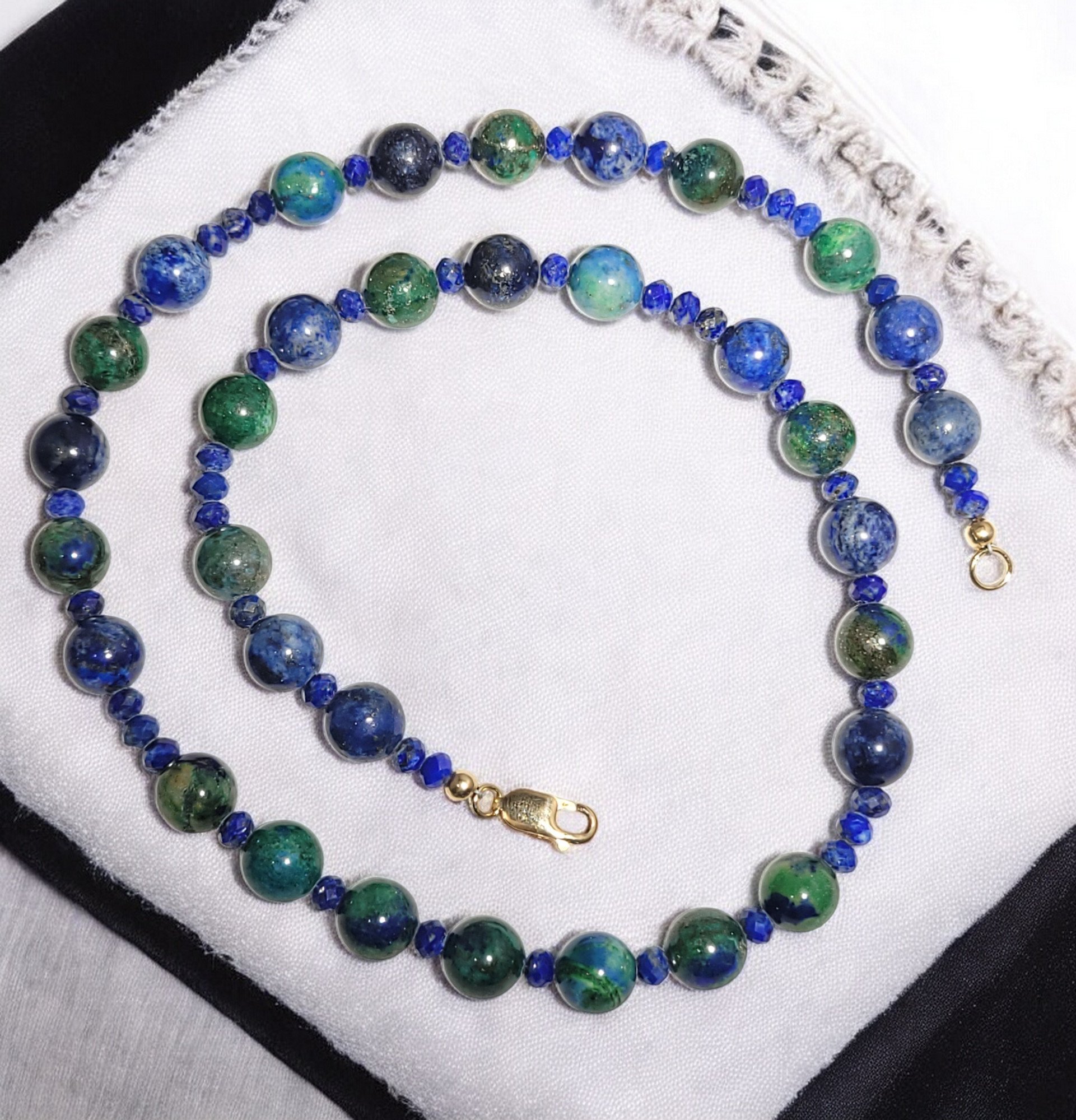
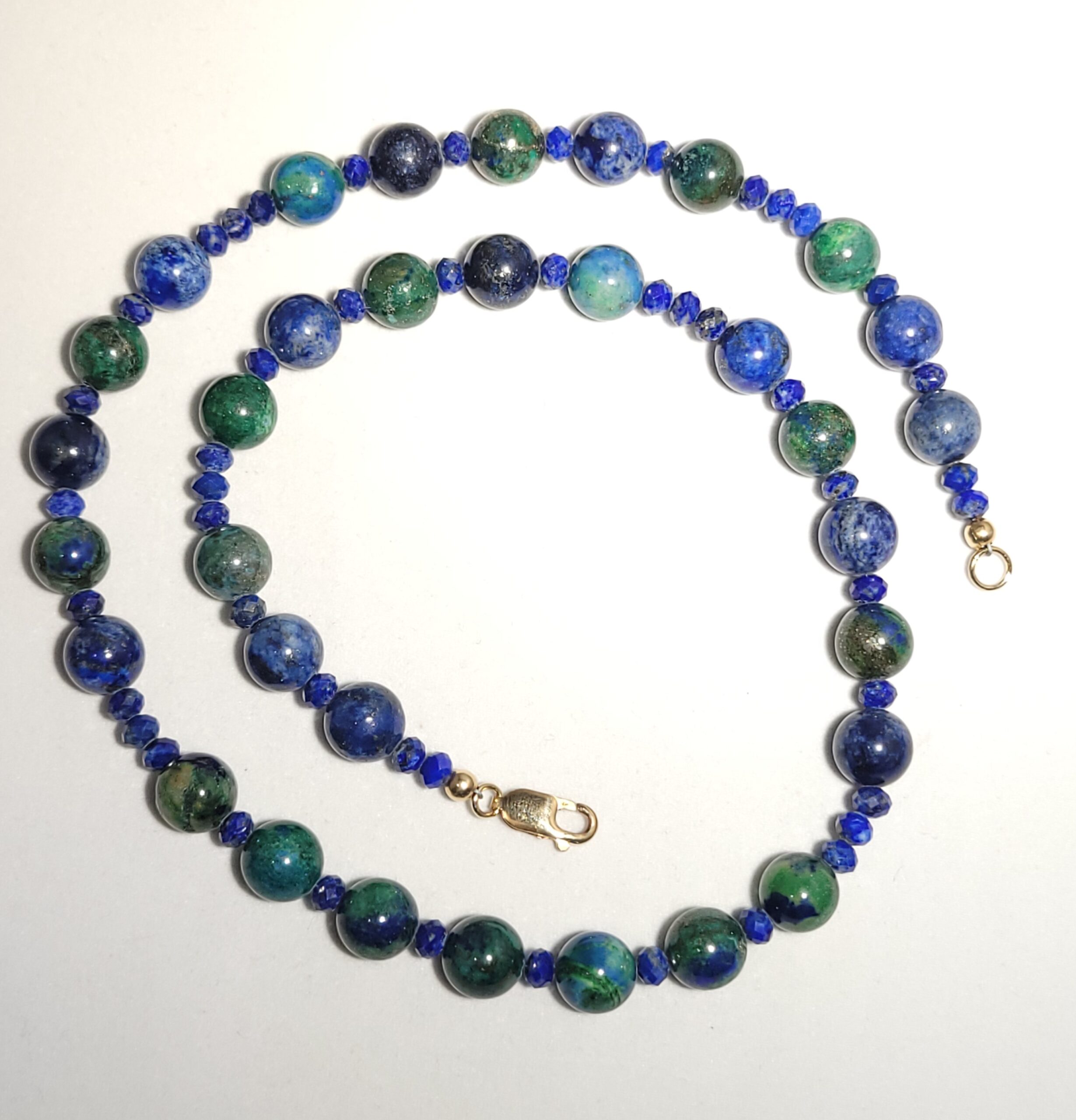
Description
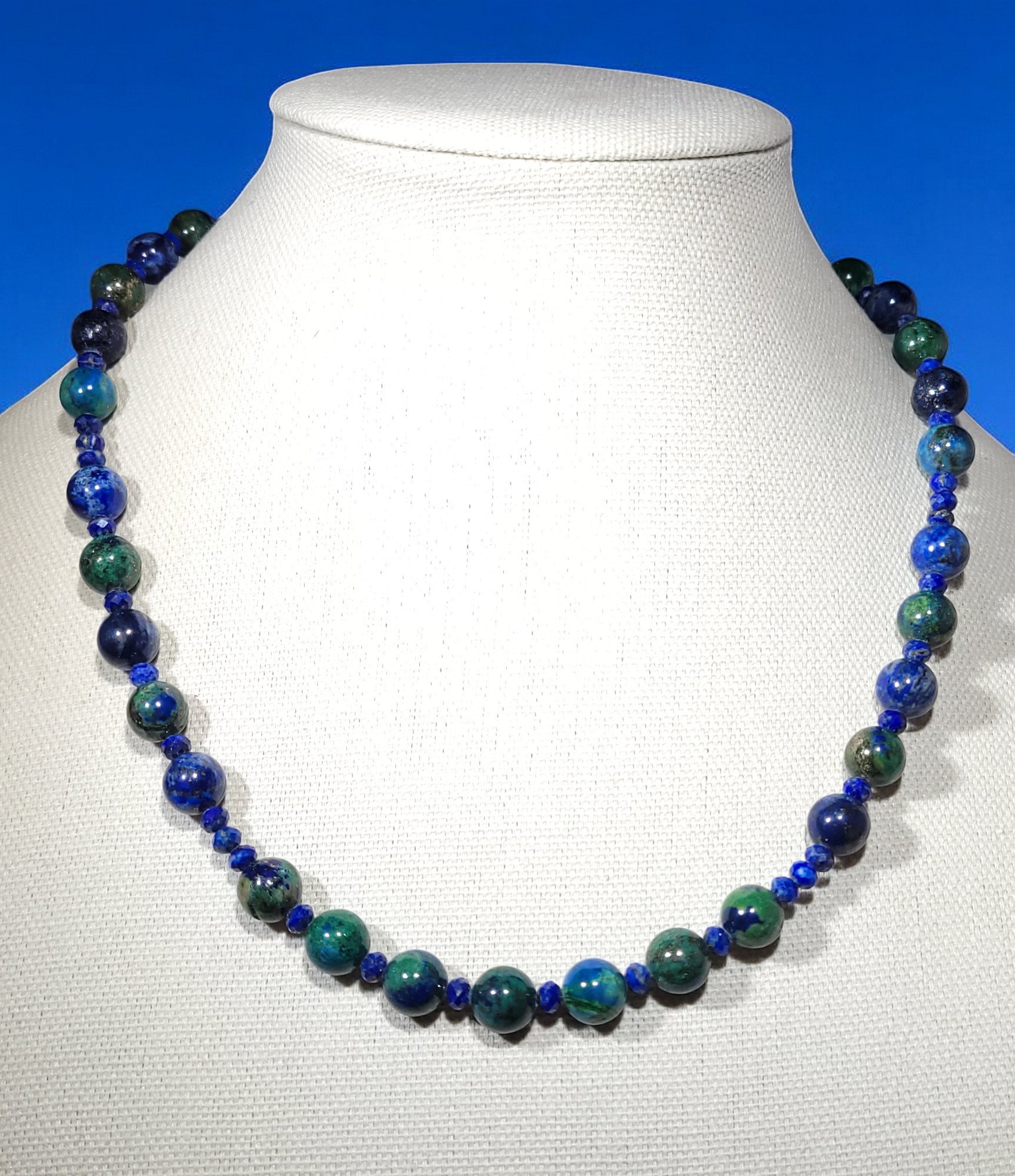
Azurite-Malachite and faceted lapis lazuli, with a gold-filled lobster clasp and findings. Measures 21 1/4″
Azurite-Malachite.
Azurite-Malachite is a blend of two popular gems: the deep blues of azurite and the green shades of banded malachite. These two copper-based gemstones are frequently found in copper mines, or near mines of other copper-based gemstones such as turquoise and chrysocolla. The oldest mine known is at Timna Valley in Israel, in operation for over 3,000 years.
In ancient Egypt, azuritevwas used to create the protective blue eye of Horus. It was also ground for use as the pigment “mountain blue” or “Armenian stone.”
Via chemical analysis, it was discovered that azurite from the well-known mines in France was used in many of the medieval paintings of the Virgin Mary in a blue robe, rather than lapis lazuli. Malachite was ground into eye shadow powder (unfortunately toxic); the goddess Hathor was known as “the Lady of Malachite.” It was thought that wearing malachite around heads and arms protected them from epidemics.
This is a soft stone and its surface can be easily damaged. This copper carbonate combination is extremely sensitive to heat, as well as sun-bleaching. Always store in a dark place in a separate container from other jewelry pieces. Anti-tarnish strips can slow down the process by which azurite converts to malachite and prolong the life of the stone as it currently is. Keep away from hot water, ovens and other hot surfaces. Do not leave in the sun or immerse in water.
Reserve these gems for occasional jewelry use.
3.5 – 4 on the Mohs hardness scale
Lapis Lazuli.
Historians believe the link between humans and lapis lazuli stretches back more than 6,500 years. The gem was treasured by the ancient civilizations of Mesopotamia, Egypt, China, Greece, and Rome. It was regarded as a stone fit for royalty and fetched a princely sum. It takes a prominent place in many treasures recovered from the tombs of the pharaohs of ancient Egypt. Lapis has been used to produce jewelry, carvings, mosaics, and a variety of ornamental pieces. In addition, prior to the discovery and chemical synthesis of various blue pigments, the stone was ground and processed to produce ultramarine, a pigment used in tempera paints. In architecture, the pigment has been used to clad the walls of palaces and shrines. The popularity of lapis as a gemstone continues through today. The finest lapis comes from the Badakhshan area in northern Afghanistan. This source may be the world’s oldest continually worked set of mines for lapis—the same mines operating today supplied lapis to the pharaohs and ancient Sumerians. Using stones from this source, the artisans of the Indus Valley Civilization made beautiful carvings and merchants traded them in distant lands.
5-5.5 on the Mohs hardness scale